
Anthropology, Bachelor of Arts (608)
- Undergraduate
- AB
- Arts & Letters
- Society, Culture, Crime, and Justice Studies
Overview
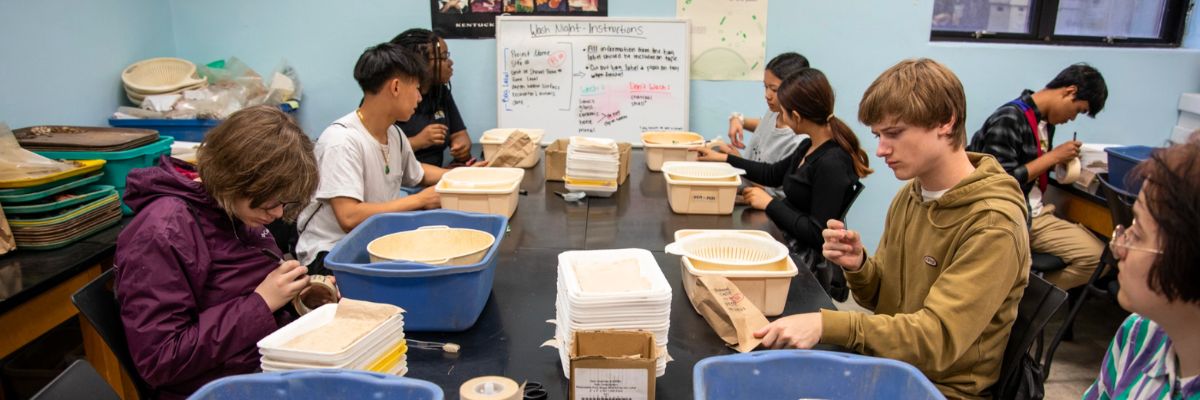
Anthropology is the scientific and humanistic study of human culture and biology in the past and present and anywhere in the world. The anthropology major offers students a cohesive program of study to enrich their understanding of interactions between human culture and biology in contemporary societies and in the archaeological and evolutionary past, to develop their cross-cultural perspectives, and to prepare them for a variety of careers. Delivered by full-time faculty members, the anthropology curriculum emphasizes hands-on learning in the classroom, in the laboratory, and in the field; extracurricular opportunities and events; and a broad, four-field approach including cultural anthropology, biological anthropology, linguistic anthropology, and archaeology. The anthropology major encourages students to step outside their biocultural bubbles to explore the rich diversity of human experiences in their own communities and around the globe.
Concentrations
- Applied Anthropology (ANAP)
- Archaeology (ANAR)
- Biological Anthropology (ANBA)
- Cultural Anthropology (ANCA)
Program Requirements (31 hours)
A baccalaureate degree requires a minimum of 120 unduplicated semester hours. More information can be found at www.wku.edu/registrar/degree_certification.php.
Students who began WKU in the Fall 2014 and thereafter should review the Colonnade requirements located at: https://www.wku.edu/colonnade/colonnaderequirements.php.
| Code | Title | Hours |
|---|---|---|
| Required Core Courses: | ||
| ANTH 120 | Introduction to Cultural Anthropology | 3 |
| ANTH 125 | Introduction to Biological Anthropology | 3 |
| ANTH 130 | Introduction to Archaeology | 3 |
| ANTH 135 | Introduction to Linguistic Anthropology | 3 |
| ANTH 399 | Field Methods in Ethnography | 3 |
| ANTH 499 | Senior Seminar | 1 |
| Total Hours | 16 | |
Applied Anthropology
| Code | Title | Hours |
|---|---|---|
| Concentration Requirements | ||
| ANTH 360 | Applied Anthropology – Understanding and Addressing Contemporary Human Problems | 3 |
| Select two courses from the following: | 6 | |
ANTH 300 | Forensic Anthropology | |
ANTH 382 | Medical Anthropology | |
ANTH 434 | Graveyard Archaeology | |
ANTH 436 | Applied Archaeology | |
ANTH 442 | Ecological and Economic Anthropology | |
ANTH 449 | Ethnographic Video Production | |
| Electives | ||
| For student's completing one concentration, select 6 hours from anthropology offerings in consultation with anthropology advisor | 6 | |
| Total Hours | 15 | |
Archaeology Concentration
| Code | Title | Hours |
|---|---|---|
| Concentration Requirements | ||
| ANTH 316 | The Archaeology of Environmental Change | 3 |
| or ANTH 318 | The Archaeologist Looks at Death | |
| or ANTH 333 | The Archaeology of Ancient China | |
| or ANTH 335 | Old World Prehistory | |
| or ANTH 336 | New World Prehistory | |
| ANTH 432 | Field Course in Archaeology (at least three hours) | 3 |
| ANTH 438 | Archaeological Lab Methods | 3 |
| Electives | ||
| For students completing one concentration, select 6 hours from anthropology offerings in consultation with advisor | 6 | |
| Total Hours | 15 | |
Biological Anthropology Concentration
| Code | Title | Hours |
|---|---|---|
| Concentration Requirements | ||
| ANTH 300 | Forensic Anthropology | 3 |
| ANTH 305 | Paleoanthropology: Human Origins and Evolution | 3 |
| ANTH 452 | Bioarchaeology | 3 |
| Electives | ||
| For students completing one concentration, select 6 hours from anthropology offerings in consultation with advisor | 6 | |
| Total Hours | 15 | |
Cultural Anthropology Concentration
| Code | Title | Hours |
|---|---|---|
| Concentration Requirements | ||
| Select one of the following: | 3 | |
ANTH 340 | Peoples and Cultures of Latin America | |
ANTH 342 | Peoples and Cultures of the Caribbean | |
ANTH 345 | Peoples and Cultures of Native North America | |
ANTH 350 | Peoples and Cultures of Africa | |
ANTH 378 | Southern Appalachian Folklife | |
| Select one of the following: | 3 | |
ANTH 343 | Anthropology of Gender | |
ANTH 382 | Medical Anthropology | |
ANTH 388 | Foodways | |
ANTH 400 | Ethnomusicology | |
ANTH 410 | African-American Music | |
ANTH 442 | Ecological and Economic Anthropology | |
ANTH 446 | Anthropology of Religion | |
ANTH 448 | Visual Anthropology | |
ANTH 449 | Ethnographic Video Production | |
| Select one additional area or topics course | 3 | |
| Electives | ||
| For students completing one concentration, select 6 hours from anthropology offerings in consultation with anthropology advisor | 6 | |
| Total Hours | 15 | |
For students completing one concentration; students may count a maximum of three credit hours in ANTH 395 Lab Practicum, ANTH 493 Archaeology Stewardship, and ANTH 495 Directed Study in the first 31 hours of the major.
Finish in Four Plans
Applied Anthropology Concentration
| First Year | |||
|---|---|---|---|
| Fall | Hours | Spring | Hours |
| ANTH 120, ANTH 125, or ANTH 130 | 3 | ANTH 120, ANTH 130, or ANTH 135 | 3 |
| Second major or minor course | 3 | Second major or minor course | 3 |
| ENG 100 or COMM 145 | 3 | ENG 100 or COMM 145 | 3 |
| HIST 101 or HIST 102 | 3 | MATH 109 | 3 |
| Colonnade - Arts & Humanities | 3 | Colonnade - Natural & Physical Sciences w/ lab | 3-4 |
| 15 | 15-16 | ||
| Second Year | |||
| Fall | Hours | Spring | Hours |
| ANTH 120, ANTH 125, or ANTH 130 | 3 | ANTH 120, ANTH 130, or ANTH 135 | 3 |
| Second major or minor course | 3 | Applied Anthropology concentration course or anthropology elective course | 3 |
| Colonnade - Natural & Physical Sciences w/ no lab | 3 | Second major or minor course | 3 |
| ENG 200 (or other Colonnade - Literary Studies course) | 3 | General Elective | 3 |
| First-level world language requirement or general elective | 3 | Second-level world language course or general elective course | 3 |
| 15 | 15 | ||
| Third Year | |||
| Fall | Hours | Spring | Hours |
| Applied Anthropology concentration course or anthropology elective course | 3 | Applied Anthropology concentration course or anthropology elective course | 3 |
| Second major or minor course | 3 | ANTH 399 | 3 |
| Second major or minor course | 3 | Second major or minor course | 3 |
| Colonnade - Connections course | 3 | Second major or minor course or general elective | 3 |
| Colonnade - Connections course | 3 | ENG 300 | 3 |
| General Elective | 2 | ||
| 17 | 15 | ||
| Fourth Year | |||
| Fall | Hours | Spring | Hours |
| Applied Anthropology concentration course or anthropology elective course | 3 | Applied Anthropology concentration course or anthropology elective course | 3 |
| Second major or minor course or general elective | 3 | Second major or minor course or general elective | 3 |
| Second major or minor course or general elective | 3 | Second major or minor course or general elective | 3 |
| Colonnade - Connections Course | 3 | ANTH 499 | 1 |
| Upper-level general elective course | 3 | Upper-level general elective course | 3 |
| 15 | 13 | ||
| Total Hours 120-121 | |||
Archaeology Concentration
| First Year | |||||
|---|---|---|---|---|---|
| Fall | Hours | Spring | Hours | ||
| ANTH 120, ANTH 125, or ANTH 130 | 3 | ANTH 120, ANTH 130, or ANTH 135 | 3 | ||
| Second major or minor course | 3 | Second major or minor course | 3 | ||
| ENG 100 or COMM 145 | 3 | ENG 100 or COMM 145 | 3 | ||
| HIST 101 or HIST 102 | 3 | MATH 109 | 3 | ||
| Colonnade - Arts & Humanities | 3 | Colonnade - Natural & Physical Sciences w/ lab | 3-4 | ||
| 15 | 15-16 | ||||
| Second Year | |||||
| Fall | Hours | Spring | Hours | ||
| ANTH 120, ANTH 125, or ANTH 130 | 3 | ANTH 120, ANTH 130, or ANTH 135 | 3 | ||
| Second major or minor course | 3 | Archaeology concentration course or anthropology elective course | 3 | ||
| Colonnade - Natural & Physical Sciences w/o Lab | 3-4 | Second major or minor course | 3 | ||
| ENG 200 (or other Colonnade - Literary Studies course) | 3 | General Elective | 3 | ||
| First-level world language requirement or general elective | 3 | Second-level world language course or general elective course | 3 | ||
| 15-16 | 15 | ||||
| Third Year | |||||
| Fall | Hours | Spring | Hours | Summer | Hours |
| Archaeology concentration course or anthropology elective course | 3 | ANTH 399 | 3 | ANTH 432 | 3 |
| Second major or minor course | 3 | Second major or minor course | 3 | ||
| Second major or minor course | 3 | Second major or minor course or general elective | 3 | ||
| Colonnade - Connections course | 3 | ENG 300 | 3 | ||
| General Elective (not needed if two 4-hour courses completed in prior years) | 0-2 | Colonnade - Connections course | 3 | ||
| 12-14 | 15 | 3 | |||
| Fourth Year | |||||
| Fall | Hours | Spring | Hours | ||
| Archaeology concentration course or anthropology elective course | 3 | Archaeology concentration course or anthropology elective course | 3 | ||
| Second major or minor course or general elective | 3 | Second major or minor course or general elective | 3 | ||
| Second major or minor course or general elective | 3 | Second major or minor course or general elective | 3 | ||
| Colonnade - Connections Course | 3 | Upper-level general elective course | 3 | ||
| Upper-level general elective course | 3 | ANTH 499 | 1 | ||
| 15 | 13 | ||||
| Total Hours 118-122 | |||||
Biological Anthropology Concentration
| First Year | |||
|---|---|---|---|
| Fall | Hours | Spring | Hours |
| ANTH 120, ANTH 125, or ANTH 130 | 3 | ANTH 120, ANTH 130, or ANTH 135 | 3 |
| Second major or minor course | 3 | Second major or minor course | 3 |
| ENG 100 or COMM 145 | 3 | ENG 100 or COMM 145 | 3 |
| HIST 101 or HIST 102 | 3 | MATH 109 | 3 |
| Colonnade - Arts & Humanities | 3 | Colonnade - Natural & Physical Sciences w/o lab | 3 |
| 15 | 15 | ||
| Second Year | |||
| Fall | Hours | Spring | Hours |
| ANTH 120, ANTH 125, or ANTH 130 | 3 | ANTH 120, ANTH 130, or ANTH 135 | 3 |
| Second major or minor course | 3 | Biological concentration course or anthropology elective course | 3 |
| Colonnade - Natural & Physical Sciences w/ lab | 3-4 | Second major or minor course | 3 |
| ENG 200 (or other Colonnade - Literary Studies course) | 3 | General Elective | 3 |
| First-level world language requirement or general elective | 3 | Second-level world language course or general elective course | 3 |
| 15-16 | 15 | ||
| Third Year | |||
| Fall | Hours | Spring | Hours |
| Biological concentration course or anthropology elective course | 3 | Biological anthropology concentration course or anthropology elective course | 3 |
| Second major or minor course | 3 | ANTH 399 | 3 |
| Second major or minor course | 3 | Second major or minor course | 3 |
| Colonnade - Connections | 3 | Second major or minor course or general elective | 3 |
| Colonnade - Connections | 3 | ENG 300 | 3 |
| General Elective (not needed if two 4-hour courses completed in prior years) | 0-2 | ||
| 15-17 | 15 | ||
| Fourth Year | |||
| Fall | Hours | Spring | Hours |
| Biological concentration course or anthropology elective course | 3 | Biological concentration course or anthropology elective course | 3 |
| Second major or minor course or general elective | 3 | Second major or minor course or general elective | 3 |
| Second major or minor course or general elective | 3 | Second major or minor course or general elective | 3 |
| Upper-level general elective course | 3 | ANTH 499 | 1 |
| Colonnade - Connections | 3 | Upper-level general elective course | 3 |
| 15 | 13 | ||
| Total Hours 118-121 | |||
Cultural Anthropology Concentration
| First Year | |||
|---|---|---|---|
| Fall | Hours | Spring | Hours |
| ANTH 120, ANTH 125, or ANTH 130 | 3 | ANTH 120, ANTH 130, or ANTH 135 | 3 |
| Second major or minor course | 3 | Second major or minor course | 3 |
| ENG 100 or COMM 145 | 3 | ENG 100 or COMM 145 | 3 |
| HIST 101 or HIST 102 | 3 | MATH 109 | 3 |
| Colonnade - Arts & Humanities | 3 | Colonnade - Natural & Physical Sciences w/o lab | 3 |
| 15 | 15 | ||
| Second Year | |||
| Fall | Hours | Spring | Hours |
| Second major or minor course | 3 | ANTH 120, ANTH 130, or ANTH 135 | 3 |
| ANTH 120, ANTH 125, or ANTH 130 | 3 | Cultural anthropology concentration course or anthropology elective course | 3 |
| Colonnade - Natural & Physical Sciences w/ lab | 3-4 | Second major or minor course | 3 |
| ENG 200 (or other Colonnade - Literary Studies course) | 3 | General Elective | 3 |
| First-level world language requirement or general elective | 3 | Second-level world language course or general elective course | 3 |
| 15-16 | 15 | ||
| Third Year | |||
| Fall | Hours | Spring | Hours |
| Cultural anthropology concentration course or anthropology elective course | 3 | Cultural anthropology concentration course or anthropology elective course | 3 |
| Second major or minor course | 3 | ANTH 399 | 3 |
| Second major or minor course | 3 | Second major or minor course | 3 |
| Colonnade - Connections | 3 | Second major or minor course or general elective | 3 |
| Colonnade - Connections | 3 | ENG 300 | 3 |
| General Elective (not needed if two 4-hour courses completed in prior years) | 0-2 | ||
| 15-17 | 15 | ||
| Fourth Year | |||
| Fall | Hours | Spring | Hours |
| Cultural anthropology concentration course or anthropology elective course | 3 | Cultural anthropology concentration course or anthropology elective course | 3 |
| Second major or minor course or general elective | 3 | Second major or minor course or general elective | 3 |
| Second major or minor course or general elective | 3 | Second major or minor course or general elective | 3 |
| Colonnade - Connections | 3 | ANTH 499 | 1 |
| Upper-level general elective course | 3 | Upper-level general elective course | 3 |
| 15 | 13 | ||
| Total Hours 118-121 | |||