
Finance, Bachelor of Science (664)
- Undergraduate
- Bachelor of Science
- Business
- Finance
Overview
Why complete a degree in Finance?
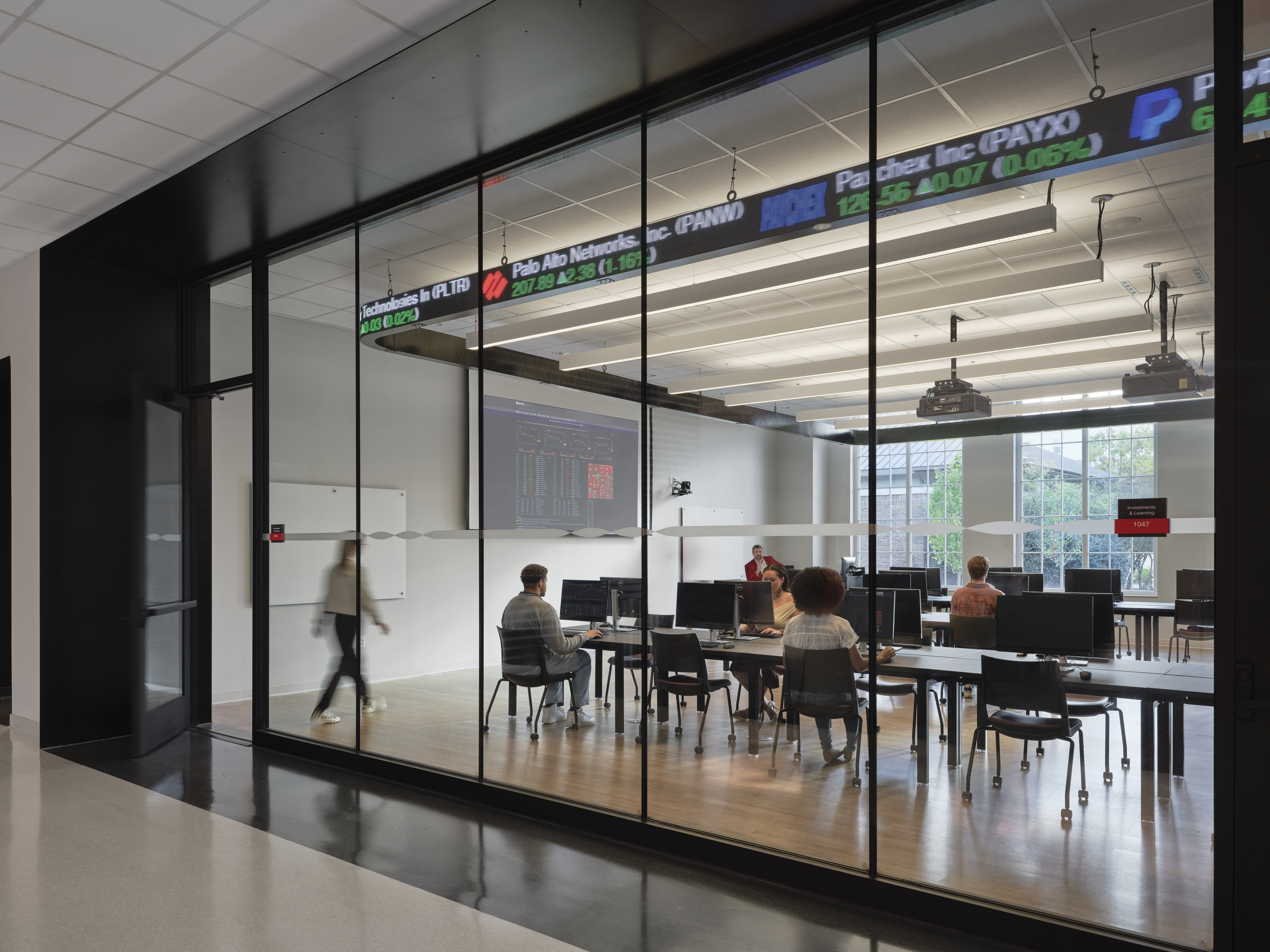
Finance has become the universal language of commerce — the discipline behind asset management, banking, treasury operations, and international markets. WKU’s Finance program gives students both the technical and analytical foundation to succeed in a fast-paced global marketplace, with distinctions that set it apart: the Cerity Partners Personal Financial Planning concentration is one of only three CFP Board–registered programs in Kentucky, and the student-managed Finance Group portfolio (part of the TVA Investment Challenge) has grown to roughly $500,000 in value.
What is your path to a degree in Finance at WKU?
The Finance program requires 78–88 hours of professional and elective coursework, within the 120 hours required for a baccalaureate degree. Rather than a course-by-course list, the path is intentionally structured so each stage builds the skills students need for both certification and career.
Business Core (27 hours)
Before diving into specialized major coursework, students build fluency across the core functions of business — accounting, economics, finance, marketing, management, statistics, and analytics. This shared foundation, completed by every Gordon Ford College of Business major, ensures graduates don’t just understand their discipline in isolation; they understand how that work connects to strategy, operations, and decision-making across an organization. A culminating strategy course ties these functions together, asking students to think like leaders rather than specialists.
Career Preparation Curriculum (6 hours)
Technical skill alone doesn’t land a job or carry a career — employers consistently rank communication and professionalism alongside technical knowledge. This curriculum is designed to ensure students enter the workforce ready on day one: developing polished written and verbal communication, building a professional identity early in their academic career, and culminating in a senior-level assessment that confirms readiness for the profession.
Finance Major Required Courses (24 hours)
This is the technical backbone of the degree, sequencing from financial accounting and modeling into investment theory and corporate asset and funds management. Every Finance graduate, regardless of concentration, leaves with this common core of analytical and decision-making skills.
Concentration Coursework (15–31 hours)
Finance touches dramatically different careers — from portfolio management to commercial banking to personal financial planning — and a one-size-fits-all curriculum can’t prepare students equally well for all of them. The concentration structure lets students specialize in the specific skills and licensing preparation their target career demands.
Concentrations
- Business Finance — General
- Business Finance — Investment
- Business Finance — Analyst (also completes the Applied Data Analytics Certificate)
- Business Finance — Financial Services
- Personal Financial Planning (CFP Board-registered program)
Concentrations
- Personal Finance Planning (FNPP)
- Business Finance Concentrations
- Business Finance - General (FNBF)
- Business Finance - Investment (FNIN)
- Business Finance - Analyst (FNAN)
- Business Finance - Banking, Insurance, and Real Estate (FNBI)
Students majoring in a program in this department may refer to the Gordon Ford College of Business introductory section for sample course schedules for the freshman and sophomore years.
When planning a program of study in this department, each student should be aware of the University’s academic requirements and regulations contained in this catalog in the chapter “Academic Information.” Specific attention should be given to the subsections in the chapter entitled (a) Academic Programs, (b) Colonnade Requirements, and (c) Academic Requirements and Regulations. Students should be aware that some academic programs may require additional scholastic regulations and standards not specified in the catalog. To obtain a copy of these regulations, students should contact the department chair.
The undergraduate finance program offers five areas of concentration within the major:
- Personal Financial Planning
- Business Finance Concentrations:
- Business Finance - General
- Business Finance - Investment
- Business Finance - Analyst
- Business Finance - Banking, Insurance, and Real Estate
Finance majors must earn a minimum grade point average of 2.0 in 300 and 400 level finance courses. In addition, finance majors must earn a “C” or better in FIN 330 and FIN 332.
Program Requirements (78/88 hours)
A baccalaureate degree requires a minimum of 120 unduplicated semester hours. More information can be found at www.wku.edu/registrar/degree_certification.php.
Students who began WKU in the Fall 2014 and thereafter should review the Colonnade requirements located at: https://www.wku.edu/colonnade/colonnaderequirements.php.
Business Core
Employers are seeking business graduates who 1) are well-prepared in their specific major, 2) possess foundational knowledge about other business disciplines, and 3) are career ready and professional. All majors in the Gordon Ford College of Business complete MATH 123 (Mathematical Applications for Business) and a common set of business and career preparation courses (the business core) in addition to the courses specific for their selected major.
| Code | Title | Hours |
|---|---|---|
| Business Foundations Courses | ||
| MATH 123 | Mathematical Applications for Business * | 3 |
| ACCT 110 | Accounting for Decision Makers | 3 |
| BDAN 250 | Introduction to Analytics | 3 |
| ECON 206 | Statistics | 3 |
| ECON 202 | Principles of Economics (Micro) | 3 |
| FIN 330 | Principles of Finance | 3 |
| MGT 210 | Organization and Management | 3 |
| MKT 220 | Basic Marketing Concepts | 3 |
| MGT 498 | Strategy and Policy | 3 |
| or ENT 496 | Hilltopper Student Consulting Experience | |
| Career Preparation Courses | ||
| BA 170 | Business Student Basics 1 | 1 |
| or BA 175 | University Experience-Business | |
| or BA 220 | Special Topics in Business Administration (Lower Division) | |
| MGT 261 | Business Communication Fundamentals | 3 |
| FIN 399 | Career Readiness in Finance | 1 |
| FIN 499 | Senior Assessment in Finance | 1 |
| Total Hours | 33 | |
- *
Or any calculus class, or math ACT score of at least 26, or math SAT score of at least 610.
- 1
BA 175 is only for Business LLC students. BA 220 is only for WKU students and transfer students who choose a business major as a sophomore or higher.
All Finance Majors
All Finance majors will complete the following courses regardless of concentration. All majors must earn a C or better in FIN 330 and FIN 332 and must have a cumulative GPA of 2.0 or better in all finance classes.
| Code | Title | Hours |
|---|---|---|
| Finance Major Required Courses | ||
| ACCT 220 | Principles of Financial Accounting | 3 |
| ECON 307 | Financial Data Modeling | 3 |
| FIN 161 | Personal Finance | 3 |
| FIN 332 | Investment Theory | 3 |
| FIN 389 | Financial Analysis and Modeling | 3 |
| FIN 433 | Financial Markets and Institutions | 3 |
| FIN 437 | Corporate Asset Management | 3 |
| FIN 438 | Corporate Funds Management | 3 |
| Total Hours | 24 | |
Business Finance Concentrations (78 hours)
All four Business Finance Concentrations require 78 hours of professional and elective courses and lead to a Bachelor of Science degree. No minor or second major is required or prohibited. Business Finance has four concentrations:
1. Investment
2. Analyst
3. Financial Services
4. General Business Finance
All Business Finance Majors must complete the following courses
| Code | Title | Hours |
|---|---|---|
| Common Courses for all Business Finance Majors | ||
| FIN 436 | International Financial Management | 3 |
| Select 3 hours of Upper-Level Business Electives, including prefixes ACCT, BDAN, CIS, ECON, ENT, FIN, MGT, and MKT | 3 | |
| Total Hours | 6 | |
Investment Concentration
The Investment concentration focuses on the proper use of investment instruments, how markets works, proper portfolio construction and the allocation of resources to meet financial goals. Students are exposed to both theoretical concepts and applied investments.
Career paths for students include financial analyst, investment consultant, portfolio manager, private wealth manager, stockbroker, and risk manager. Potential employers include investment firms, investment banks, insurance companies, mutual funds, hedge funds, pension funds, securities firms, private equity groups, venture capital firms, and government agencies.
| Code | Title | Hours |
|---|---|---|
| Investment Required Courses | ||
| FIN 331 | Applied Investments | 3 |
| FIN 419 | Behavioral Finance and Investing | 1.5 |
| FIN 439 | Security Analysis and Portfolio Management | 3 |
| FIN 449 | Practicum in Portfolio Management | 3 |
| Upper-Level Finance Electives | 4.5 | |
| Total Hours | 15 | |
Analyst Concentration
The Analyst Concentration is designed to develop financial and data analysis skills necessary to support various analyst roles including financial analyst, risk analyst, valuation analyst, and investment analyst. Analyst jobs typically involve a great deal of data analytics and the use of financial technology (a fast-growing area in finance). The role of an analyst is often both analytical and client-facing. The Analyst Concentration focuses on skills for gathering and parsing financial data, analyzing and interpreting financial statements, evaluating a company's performance, and communicating findings.
Students in the Analyst Concentration can expect to have a range of job functions and career path possibilities across multiple industries from which to choose upon graduation.
The Analyst Concentration also completes the requirements for a Certificate in Applied Data Analytics. Note: Students must apply for the certificate after completing requirements.
| Code | Title | Hours |
|---|---|---|
| Analyst Required Courses | ||
| BDAN 310 | Business Data Analytics | 3 |
| BDAN 330 | Structured Data Analysis | 3 |
| or BDAN 430 | Data Visualization | |
| Upper-Level Finance Electives | 6 | |
| Select one of the following: | ||
| FIN 439 | Security Analysis and Portfolio Management | 3 |
| or FIN 449 | Practicum in Portfolio Management | |
| Total Hours | 15 | |
Banking, Insurance, and Real Estate Concentration
The Financial Services Concentration provides students with analytical and problem-solving skills to prepare students for careers in the financial services industry. The financial services industry is made up of companies dealing specifically with the management of money. Banks, and other depository institutions, insurance companies, finance companies, and mortgage lending companies are examples of businesses in the financial services industry.
Possible careers for Financial Services graduates include bank examiner, credit analyst, insurance adjuster, insurance agent, depository institution management, and underwriter.
| Code | Title | Hours |
|---|---|---|
| Banking, Insurance, and Real Estate Required Courses | ||
| FIN 350 | Risk Management and Insurance | 3 |
| FIN 405 | Legal and Regulatory Aspects of Personal Financial Planning | 1.5 |
| FIN 419 | Behavioral Finance and Investing | 1.5 |
| FIN 435 | Commercial Bank Management | 3 |
| MKT 325 | Personal Selling | 3 |
| Upper-Level Finance Elective | 3 | |
| Total Hours | 15 | |
General Business Finance Concentration
| Code | Title | Hours |
|---|---|---|
| General Business Finance Required Courses | ||
| Upper-Level Finance Electives | 12 | |
| Choose one of the following: | ||
| FIN 439 | Security Analysis and Portfolio Management | 3 |
| or FIN 449 | Practicum in Portfolio Management | |
| Total Hours | 15 | |
Personal Financial Planning Concentration
The Personal Financial Planning concentration requires 87-88 hours of professional and elective courses and leads to a Bachelor of Science degree. The personal financial planning concentration deals with the process of developing comprehensive financial plans for individuals. Financial planners help individuals determine financial goals and objectives and the best strategies for obtaining these goals. The rapid growth of multi-income families in the U.S. has placed more and more people in a position of need to apply sophisticated financial planning techniques to their personal economic affairs. As a result, one of the fastest growing career paths in the financial services industry is financial planning, and the Certified Financial PlannerTM (CFP) ® designation has become the most widely recognized financial planning credential among consumers.
The Personal Financial Planning concentration is registered with the Certified Financial Planner Board of Standards in Washington D.C. We are one of only three registered universities in the state of Kentucky! This registration confers a special advantage on our graduates. Upon completion of our CFP® board certified program, students are allowed to sit for the CFP® Certification Examination.
Western Kentucky University does not certify individuals to use the CFP®, Certified Financial PlannerTM, and CFP® (with flame logo) certification marks. The CFP certification is granted only by the Certified Financial Planner Board of Standards to those persons who, in addition to completing an educational requirement such as this CFP Board-Registered Program, have met its ethics, experience, and examination requirements.
The Certified Financial Planner Board of Standards Inc. owns the marks CFP®, Certified Financial PlannerTM, and CFP® (with flame logo) which it awards to individuals who successfully complete initial and ongoing certification requirements.
| Code | Title | Hours |
|---|---|---|
| Personal Financial Planning Concentration Required Courses | ||
| FIN 331 | Applied Investments | 3 |
| FIN 333 | Advanced Topics in PFP | 3 |
| FIN 350 | Risk Management and Insurance | 3 |
| FIN 405 | Legal and Regulatory Aspects of Personal Financial Planning | 1.5 |
| FIN 419 | Behavioral Finance and Investing | 1.5 |
| FIN 444 | Retirement Planning | 3 |
| FIN 445 | Estate Planning | 3 |
| FIN 450 | Financial Plan Development | 3 |
| FIN 439 | Security Analysis and Portfolio Management | 3 |
| or FIN 449 | Practicum in Portfolio Management | |
| Upper-Level Finance Elective | 3 | |
| Choose 3 hours from the following: | 3 | |
BDAN 310 | Business Data Analytics | |
BDAN 430 | Data Visualization | |
FIN 435 | Commercial Bank Management | |
FIN 436 | International Financial Management | |
FIN 449 | Practicum in Portfolio Management | |
MKT 325 | Personal Selling | |
| Total Hours | 30 | |
Finish in Four Plans
Finance majors must earn a minimum grade point average of 2.0 in 300 and 400 level finance courses. In addition, finance majors must earn a “C” or better in FIN 330 and FIN 332.
Business Finance Concentrations
Investment Concentration
| First Year | |||
|---|---|---|---|
| Fall | Hours | Spring | Hours |
| Colonnade: Arts & Humanities | 3 | Colonnade: Natural & Physical Sciences | 3 |
| COMM 145 (F-OC) | 3 | ECON 202 | 3 |
| MATH 123 (F-QR) | 3 | ENG 100 | 3 |
| ACCT 110 | 3 | BDAN 250 | 3 |
| Colonnade: Natural & Physical Sciences w/lab | 3-4 | FIN 161 | 3 |
| BA 170, BA 175, or BA 220 | 1 | ||
| 16-17 | 15 | ||
| Second Year | |||
| Fall | Hours | Spring | Hours |
| MGT 261 | 3 | ENG 200 | 3 |
| HIST 101 or HIST 102 | 3 | MKT 220 | 3 |
| MGT 210 | 3 | FIN 330 | 3 |
| ECON 206 | 3 | ECON 307 | 3 |
| ACCT 220 | 3 | Colonnade: Connections (Systems)1 | 3 |
| FIN 399 | 1 | ||
| 15 | 16 | ||
| Third Year | |||
| Fall | Hours | Spring | Hours |
| FIN 332 | 3 | FIN 405 | 1.5 |
| Business Elective | 3 | ENG 300 | 3 |
| FIN 331 | 3 | FIN 419 | 1.5 |
| FIN 389 | 3 | FIN 436 | 3 |
| Finance Elective | 3 | FIN 439 | 3 |
| General Elective | 3 | ||
| 15 | 15 | ||
| Fourth Year | |||
| Fall | Hours | Spring | Hours |
| Colonnade: Connections (Social & Cultural) | 3 | Colonnade: Connections (Local to Global) | 3 |
| FIN 438 | 3 | MGT 498 or ENT 496 | 3 |
| FIN 449 (by application only) | 3 | FIN 433 | 3 |
| FIN 437 | 3 | General Elective | 3 |
| General Elective | 3 | FIN 499 | 1 |
| 15 | 13 | ||
| Total Hours 120-121 | |||
Analyst Concentration
| First Year | |||
|---|---|---|---|
| Fall | Hours | Spring | Hours |
| Colonnade: Arts & Humanities | 3 | Colonnade: Natural & Physical Sciences | 3 |
| COMM 145 (F-OC) | 3 | ECON 202 | 3 |
| MATH 123 (F-QR) | 3 | ENG 100 | 3 |
| ACCT 110 | 3 | BDAN 250 | 3 |
| Colonnade: Natural & Physical Sciences w/lab | 3 | FIN 161 | 3 |
| BA 170, BA 175, or BA 220 | 1 | ||
| 16 | 15 | ||
| Second Year | |||
| Fall | Hours | Spring | Hours |
| MGT 261 | 3 | ENG 200 | 3 |
| HIST 101 or HIST 102 | 3 | MKT 220 | 3 |
| MGT 210 | 3 | FIN 330 | 3 |
| ECON 206 | 3 | ECON 307 | 3 |
| ACCT 220 | 3 | BDAN 310 | 3 |
| FIN 399 | 1 | ||
| 15 | 16 | ||
| Third Year | |||
| Fall | Hours | Spring | Hours |
| FIN 332 | 3 | Colonnade: Connections (Systems) | 3 |
| FIN 389 | 3 | ENG 300 | 3 |
| BDAN 330 or BDAN 430 | 3 | FIN 439 or FIN 449 | 3 |
| Business Elective | 3 | FIN 436 | 3 |
| Finance Elective | 3 | Finance Elective | 3 |
| 15 | 15 | ||
| Fourth Year | |||
| Fall | Hours | Spring | Hours |
| Colonnade: Connections (Social & Cultural) | 3 | Colonnade: Connections (Local to Global) | 3 |
| FIN 437 | 3 | MGT 498 | 3 |
| FIN 438 | 3 | FIN 433 | 3 |
| General Elective | 3 | General Elective | 3 |
| General Elective | 3 | FIN 499 | 1 |
| 15 | 13 | ||
| Total Hours 120 | |||
Banking, Insurance, and Real Estate Concentration
| First Year | |||
|---|---|---|---|
| Fall | Hours | Spring | Hours |
| Colonnade: Arts & Humanities | 3 | Colonnade: Natural & Physical Sciences | 3 |
| COMM 145 (F-OC) | 3 | ECON 202 | 3 |
| MATH 123 (F-QR) | 3 | ENG 100 | 3 |
| ACCT 110 | 3 | BDAN 250 | 3 |
| Colonnade: Natural & Physical Sciences w/lab | 3-4 | FIN 161 | 3 |
| BA 170, BA 175, or BA 220 | 1 | ||
| 16-17 | 15 | ||
| Second Year | |||
| Fall | Hours | Spring | Hours |
| MGT 261 | 3 | ENG 200 | 3 |
| HIST 101 or HIST 102 | 3 | FIN 330 | 3 |
| MKT 220 | 3 | MGT 210 | 3 |
| ECON 206 | 3 | ECON 307 | 3 |
| ACCT 220 | 3 | Colonnade: Connections (Systems)1 | 3 |
| FIN 399 | 1 | ||
| 15 | 16 | ||
| Third Year | |||
| Fall | Hours | Spring | Hours |
| MKT 325 | 3 | General Elective | 3 |
| FIN 332 | 3 | ENG 300 | 3 |
| FIN 350 | 3 | FIN 435 | 3 |
| FIN 333 | 3 | FIN 436 | 3 |
| Colonnade: Connections (Local to Global)2 | 3 | FIN 405 or FIN 419 | 1.5 |
| 15 | 15 | ||
| Fourth Year | |||
| Fall | Hours | Spring | Hours |
| Colonnade: Connections (Social & Cultural) | 3 | MGT 498 or ENT 496 | 3 |
| FIN 438 | 3 | FIN 389 | 3 |
| FIN 437 | 3 | FIN 433 | 3 |
| Business Elective | 3 | General Elective | 3 |
| General Elective | 3 | FIN 499 | 1 |
| 15 | 13 | ||
| Total Hours 120-121 | |||
Business Finance General Concentration
| First Year | |||
|---|---|---|---|
| Fall | Hours | Spring | Hours |
| Colonnade: Arts & Humanities | 3 | Colonnade: Natural & Physical Sciences | 3 |
| COMM 145 (F-OC) | 3 | ECON 202 | 3 |
| MATH 123 (F-QR) | 3 | ENG 100 | 3 |
| ACCT 110 | 3 | BDAN 250 | 3 |
| BA 170, BA 175, or BA 220 | 1 | FIN 161 | 3 |
| Colonnade: Natural & Physical Sciences w/lab | 3-4 | ||
| 16-17 | 15 | ||
| Second Year | |||
| Fall | Hours | Spring | Hours |
| MGT 261 | 3 | ENG 200 | 3 |
| HIST 101 or HIST 102 | 3 | MKT 220 | 3 |
| MGT 210 | 3 | FIN 330 | 3 |
| ECON 206 | 3 | ECON 307 | 3 |
| ACCT 220 | 3 | Colonnade: Connections (Systems)1 | 3 |
| FIN 399 | 1 | ||
| 15 | 16 | ||
| Third Year | |||
| Fall | Hours | Spring | Hours |
| FIN 389 | 3 | Colonnade: Connections (Local to Global) | 3 |
| FIN 433 | 3 | ENG 300 | 3 |
| FIN 332 | 3 | FIN 436 | 3 |
| Finance Elective | 3 | General Elective | 3 |
| Business Elective | 3 | Finance Elective | 3 |
| 15 | 15 | ||
| Fourth Year | |||
| Fall | Hours | Spring | Hours |
| Colonnade: Connections (Social & Cultural) | 3 | MGT 498 or ENT 496 | 3 |
| FIN 438 | 3 | FIN 439 or FIN 449 (by application only) | 3 |
| FIN 437 | 3 | Finance Elective | 3 |
| Finance Elective | 3 | General Elective | 3 |
| General Elective | 3 | FIN 499 | 1 |
| 15 | 13 | ||
| Total Hours 120-121 | |||
Personal Financial Planning Concentration
| First Year | |||
|---|---|---|---|
| Fall | Hours | Spring | Hours |
| Colonnade: Arts & Humanities | 3 | Colonnade: Natural & Physical Sciences | 3 |
| COMM 145 (F-OC) | 3 | ECON 202 | 3 |
| MATH 123 (F-QR) | 3 | ENG 100 | 3 |
| ACCT 110 | 3 | BDAN 250 | 3 |
| BA 170, BA 175, or BA 220 | 1 | FIN 161 | 3 |
| Colonnade: Natural & Physical Sciences w/lab | 3-4 | ||
| 16-17 | 15 | ||
| Second Year | |||
| Fall | Hours | Spring | Hours |
| MGT 261 | 3 | ENG 200 | 3 |
| HIST 101 or HIST 102 | 3 | FIN 330 | 3 |
| MGT 210 | 3 | MKT 220 | 3 |
| ECON 206 | 3 | ECON 307 | 3 |
| ACCT 220 | 3 | Colonnade: Connections (Systems)2 | 3 |
| FIN 399 | 1 | ||
| 15 | 16 | ||
| Third Year | |||
| Fall | Hours | Spring | Hours |
| FIN 332 | 3 | FIN 350 | 3 |
| FIN 433 | 3 | ENG 300 | 3 |
| FIN 333 | 3 | PFP Elective | 3 |
| FIN 331 | 3 | FIN 439 or FIN 449 | 3 |
| Colonnade: Connections (Local to Global)3 | 3 | FIN 405 or FIN 419 | 1.5 |
| 15 | 15 | ||
| Fourth Year | |||
| Fall | Hours | Spring | Hours |
| Colonnade: Connections (Social & Cultural) | 3 | FIN 389 | 3 |
| FIN 438 | 3 | MGT 498 or ENT 496 | 3 |
| FIN 444 | 3 | FIN 445 | 3 |
| Finance Elective | 3 | FIN 450 | 3 |
| FIN 437 | 3 | FIN 499 | 1 |
| 15 | 13 | ||
| Total Hours 120-121 | |||